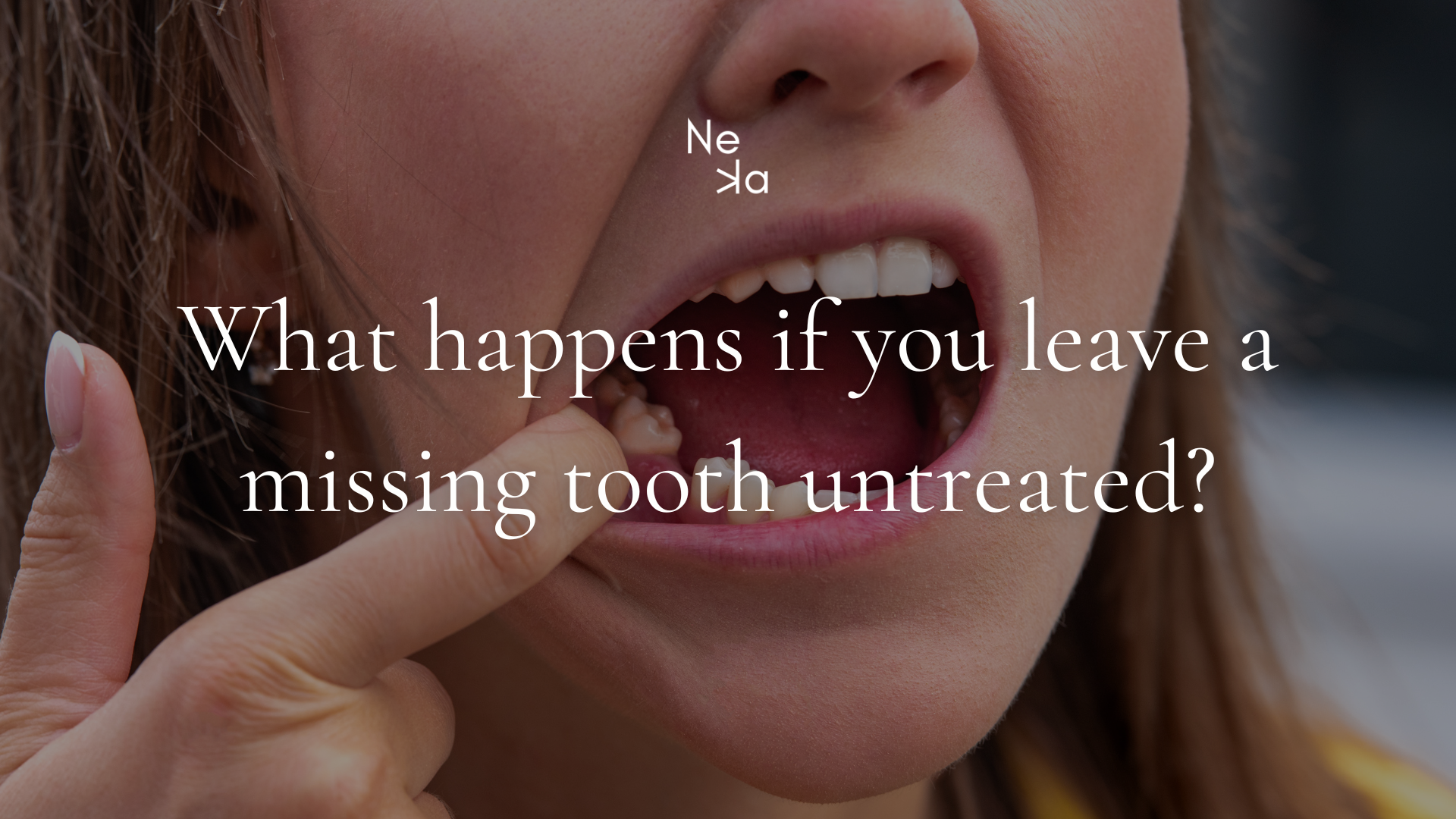
What happens if you leave a missing tooth untreated?
Losing a tooth can happen for many reasons, whether it's due to an accident, tooth decay or gum disease. While it may seem tempting to leave a gap if it's not visible when you smile, a missing tooth can have a much bigger impact on your oral health than many people realise.
At Neka Wellbeing, our private dental clinic in Sandgate, Kent, near Folkestone, we often see patients who initially ignored a missing tooth only to find that it later caused additional dental problems. The good news is that replacing a missing tooth early can often prevent these complications and help maintain a healthy, confident smile.
A Missing Tooth Doesn't Just Leave a Gap
Your teeth are designed to work together as a complete system. Every tooth helps support the others by sharing the forces created when you bite and chew.
When one tooth is lost, that balance is disrupted.
Although the gap may not seem like a problem initially, changes often begin within weeks or months.
Your Teeth Begin to Move
One of the biggest consequences of leaving a missing tooth untreated is tooth movement.
Your teeth naturally want to occupy any available space. The neighbouring teeth can gradually drift into the gap, while the opposing tooth in the opposite jaw may begin to move down or up because it no longer has anything to bite against.
This movement can lead to:
Crooked teeth
Gaps appearing elsewhere
Bite problems
Difficulty cleaning between teeth
Increased plaque build-up
The longer the gap remains, the more significant these changes can become.
Your Bite Can Change
Even losing a single tooth can alter the way your upper and lower teeth meet.
As surrounding teeth shift, your bite may become uneven, causing extra pressure on certain teeth.
This can result in:
Jaw discomfort
Tooth wear
Chipped teeth
Headaches
Increased strain on your jaw joints
Replacing a missing tooth helps maintain proper balance throughout your mouth.
Bone Loss Begins
Many people are surprised to learn that the jawbone relies on stimulation from the roots of your teeth.
When a tooth is removed, that stimulation disappears.
Over time, the bone beneath the missing tooth begins to shrink in a process called bone resorption.
This can lead to:
Loss of jawbone volume
Changes in facial appearance
A sunken look around the mouth
More complex treatment in the future
This is one reason why dental implants are often recommended—they help stimulate the jawbone in a similar way to a natural tooth root.
Chewing Becomes More Difficult
Your remaining teeth have to work harder to compensate for the missing tooth.
Many people subconsciously begin chewing on one side of their mouth, placing additional pressure on healthy teeth.
Over time this uneven wear can increase the likelihood of further dental problems.
The Risk of Gum Disease Can Increase
When teeth move out of position, they often become harder to clean properly.
Food and plaque can collect in newly formed spaces, increasing the risk of:
Tooth decay
Gum disease
Bad breath
Future tooth loss
Maintaining the correct spacing between teeth helps make effective cleaning much easier.
It Can Affect Your Confidence
A missing tooth isn't just a dental issue—it can affect how you feel about yourself.
Many patients tell us they begin:
Smiling less
Covering their mouth when laughing
Avoiding photographs
Feeling self-conscious when speaking
Replacing a missing tooth can have a significant impact on confidence as well as oral health.
Treatment Options for Missing Teeth
The right solution depends on your individual circumstances, but modern dentistry offers several highly effective options.
Dental Implants
A dental implant replaces both the tooth root and the visible tooth, making it one of the most natural and long-lasting solutions available.
Dental implants can help:
Prevent bone loss
Restore chewing ability
Protect neighbouring teeth
Create a natural-looking result
Dental Bridges
A bridge replaces one or more missing teeth by securing an artificial tooth to neighbouring teeth.
This can restore both appearance and function without surgery.
Dentures
Modern dentures are lighter, more comfortable and more natural-looking than ever before and remain a suitable option for some patients.
During your consultation, we'll explain which treatment is most appropriate for your individual needs.
Missing Teeth and Smile Transformations
If you're considering a smile transformation or complete smile makeover, replacing missing teeth is often one of the first stages of treatment.
Creating a healthy, stable foundation allows cosmetic treatments such as composite bonding, veneers and teeth whitening to deliver the best possible long-term results.
A complete smile makeover isn't just about improving appearance—it's about restoring function, comfort and confidence too.
When Should You Replace a Missing Tooth?
In most cases, sooner is better.
Replacing a missing tooth before neighbouring teeth begin to move can often make treatment simpler and help preserve your natural bone and bite.
Waiting several years may still allow treatment, but additional procedures such as bone grafting or orthodontics may sometimes be required.
How Neka Wellbeing Can Help
At Neka Wellbeing, our experienced clinical team provides personalised treatment plans for patients looking to restore missing teeth and improve their oral health.
From our private dental clinic in Sandgate, Kent, near Folkestone, we offer advanced treatments including dental implants, smile makeovers, composite bonding and general dentistry to patients across Folkestone, Hythe, Dover and the surrounding areas.
Whether you've recently lost a tooth or have been living with a gap for several years, we'll assess your smile, explain your options clearly and help you choose the treatment that's right for you.
Taking action today could help prevent more complex dental problems tomorrow—and bring you one step closer to a healthier, more confident smile.